

Window Film Pricing Explained - Video Transcript
Chapter 1: Intro
One of the first questions we hear is, “How much does window film cost?” Well, the truth is it’s not just about the film. It’s about your home, your business, your windows, and everything it takes to get the job done right. Because what looks like a simple job can vary a lot depending on your windows and what it takes to make them look perfect.
In this video, let’s walk through what really determines the cost of a window film installation and how to make sure you’re comparing the right things when you’re getting quotes. I’m Jeremy from Climate Pro, your window film experts. We’ve helped thousands of homeowners and business owners find the right film for their space. If you’re like most people, you just want to make sure you’re getting a fair price and don’t want any surprises. That’s exactly what this video is all about.
Chapter 2: What Determines Price?
There are a lot of little details that go into an accurate price, but two make the biggest impact:
The overall scope of the project
The difficulty of the installation
Sometimes people are surprised to learn that it’s not just about how many windows you have; it’s what’s involved to apply the film to those windows. For example, a few small French pane windows can actually take longer than one big picture window. We’ve seen it all—skylights, sliders, tricky frames, and all types of glass. Every setup changes how much time and detail it takes. Each of these details helps us build an accurate picture of your project so you know exactly what you’re getting. All these things define the scope, and that scope determines your total price.
Chapter 3: The Type of Film Determines Cost
Another big part of the cost is the type of window film you choose. Different films are engineered and designed for different performance needs—from basic privacy or glare control to really advanced films, like the 3M Prestige product, which blocks a ton of heat without darkening your windows.
You can think of it like choosing between sunglasses. One is a good standard sunglass, and the other is a premium polarized option. They both work, but the polarized one has higher performance, giving you better clarity and better protection. Naturally, higher-end materials cost more upfront because they last longer and perform better over time.
To give you a sense of what this looks like in real life:
Average Residential Project: Usually falls somewhere around $2,000 to $3,000.
Smaller Projects: Can be under $1,000.
Large Commercial/Special Projects: Can range into the tens of thousands, or even hundreds of thousands of dollars.
Every project is unique, and we price them accordingly. Whether you have just a few sun-facing windows in your home or an entire commercial building, we price every job accurately so you know exactly what it will take and what it will cost.
Chapter 4: Project Complexity Determines Cost
The second major factor is how complex the installation will be. Here are a few questions that we ask:
How high are the windows? Will we need ladders, lifts, or additional safety equipment to get to them?
Is there old, existing window film that we have to remove?
Are the windows new, or are they older and delicate?
Do they have multiple panes or small French grids that we need to work around?
It’s not just about the windows themselves; sometimes physical access is a challenge. For example, in busy areas like downtown San Francisco, we often need a lot of extra time for parking, getting materials inside safely, and setting up equipment in tight spaces. If you’ve ever tried finding parking in the city, you know exactly what I mean. These are all things we plan for so the process goes smoothly for you. These details affect how long the project takes and what tools and materials are needed.
Chapter 5: What Determines How Long a Project Takes?
Sometimes removing old film can take just as long as installing new film, especially on older glass. In summary, easier access and newer windows could cost less. Complex access situations—like downtown jobs or older glass—may require more prep and more care.
Chapter 6: Why Square Footage Pricing Isn’t Always the Best
You’ve probably seen companies advertise a simple price per square foot. Square footage pricing sounds really simple and nice until you realize that it leaves out a lot of the details. It’s like only getting half of the picture.
Customers often tell us, “Another company gave us a much better price than you did—they quoted half the price.” However, we frequently hear back from those same customers that they ended up actually paying more in the end. After the fact, they were charged extra for things like ladders, removal, and cleanup—things that weren’t originally included in that initial square footage pricing.
That’s exactly why we always price based on the full scope of the job and don’t just throw out a flat square foot number. Our goal is to make sure everything is clearly outlined upfront. That way, you understand exactly what’s included in your quote. It’s a transparent, all-in approach. It protects you, it protects us, and it makes sure that the process of working with us is smooth and painless.
We always want to make sure our installations meet the highest standards, so sometimes our pricing isn’t the cheapest option around. When you hire Climate Pro, you’re not just hiring some installers—you’re hiring trusted people to work in your home or business. We are fully licensed and insured, and we carry full liability and workers’ compensation that covers our team. This allows you to feel confident that we’re working safely and that you have a professional company on-site. It’s one less thing you have to worry about.
We’ve worked all over California, but we really focus heavily on the Bay Area. You can trust that your project is in safe, professional hands.
Chapter 7: Keep This in Mind When Comparing Quotes
When you compare quotes, we encourage you to look beyond the bottom line. Two prices may look similar on the surface, but make sure you’re getting pricing for the same work and the same value.
Again, we try to make our proposals detailed and spell out exactly what’s included:
The exact type of film you’re getting
How we are going to prep and clean up
What the warranty is
What is explicitly included or excluded
We give that to you all upfront so you can make an informed decision with confidence. The best jobs aren’t the cheapest jobs; they’re the ones that are done right the first time.
While there’s no one-size-fits-all number, your price will always reflect the full scope, craftsmanship, materials, and details that will make the job last. If you’re ready to get a detailed quote or if you have more questions about working with Climate Pro for your home or business, visit climatepro.com. You can also check out our pricing page where we talk a little bit more about these subjects.
When you visit us or speak to one of our representatives, we’ll walk you through all the options and help you find the perfect fit so that you love the window film you choose. Thank you for watching. Again, my name is Jeremy, and we hope to be working with you soon.
What Does Window Film Really Cost? (And Why Most Quotes Get It Wrong)
If you’re dealing with scorching heat coming through your windows, sky-high energy bills, or uncomfortable glare in your home or office, window film might be exactly what you need. But here’s the challenge — when you start researching prices, you’ll find wildly different numbers that don’t seem to make any sense.
That’s because most companies price window film the wrong way.
In this guide, we’ll show you exactly what determines the cost of a quality window film installation — and more importantly, how to avoid getting burned by quotes that look cheap but end up costing you more.
Why Window Film Pricing Isn’t About Square Footage
Here’s what you need to know right up front: the best window film companies don’t price by the square foot.
Sure, you’ll see companies advertising “$8 per square foot” or similar numbers. Sounds simple, right? Until you realize that price doesn’t include:
- Removing your old film (if you have any)
- The ladder or lift equipment needed to reach your windows
- Extra time for unique applications like French panes or skylights
- Parking challenges in busy areas like downtown San Francisco
- The actual prep work and cleanup
We’ve had customers tell us, “Another company quoted half your price — but then added fees for everything.” That’s the square-foot pricing trap.
At ClimatePro, we price based on the full scope of your project — everything included, no surprises. That’s what this guide is about: helping you understand what actually goes into a professional window film installation so you can compare quotes accurately.
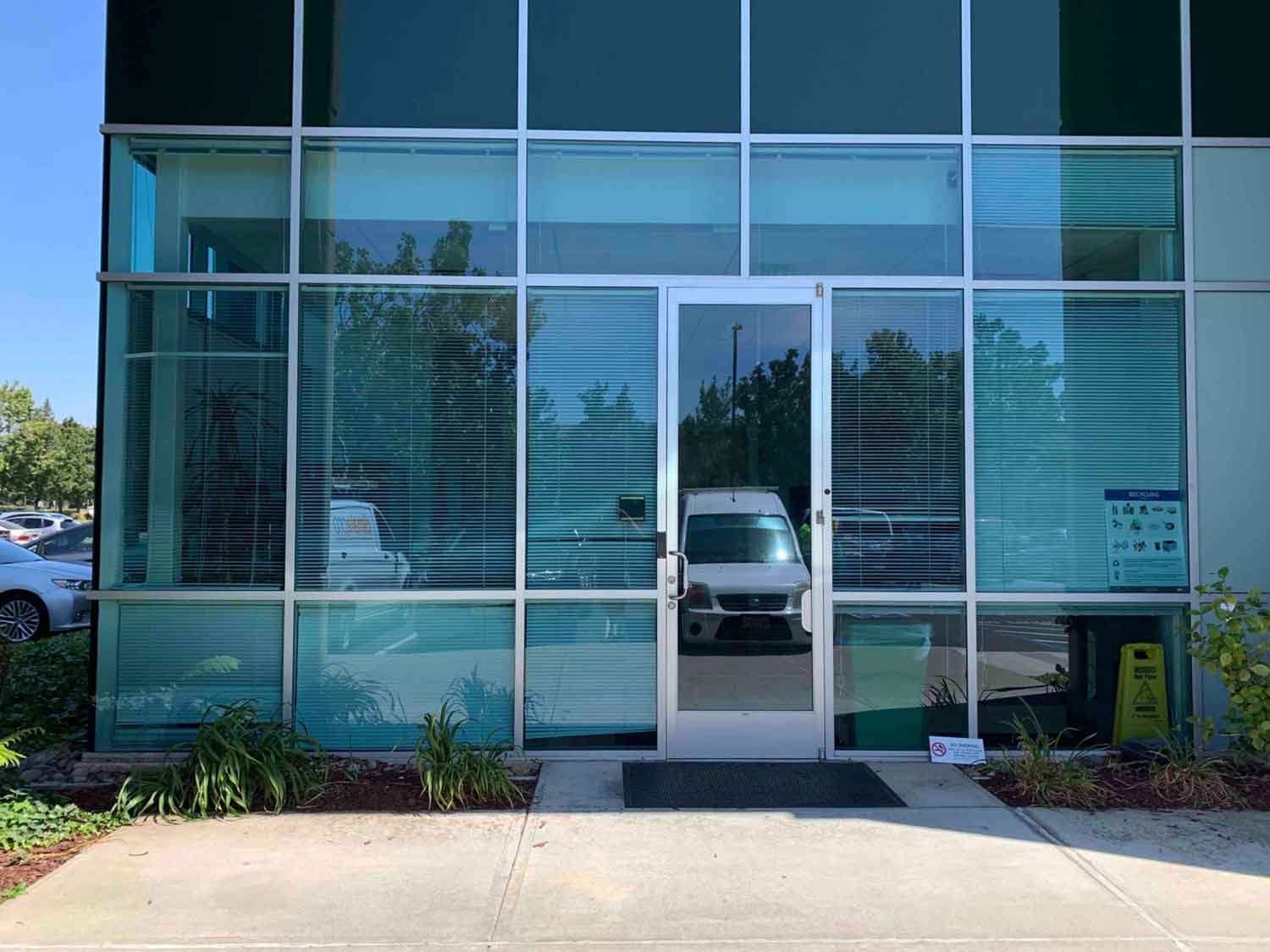
What Really Determines Your Window Film Cost
When we look at a project, three main factors determine the investment:
1. The Scope of Your Project
It’s not just how many windows you have — it’s what’s involved. A few small French panes can actually take longer than one big picture window. We’ve seen it all:
- Skylights that require special equipment
- Floor-to-ceiling glass walls in office lobbies
- Delicate historic windows that need extra care
- Oddly-shaped windows that require custom cutting
- Old film that needs careful removal before new installation
For commercial projects, the scope can range from a small retail storefront with 3-6 windows to an entire office building with hundreds of windows across multiple floors.
Every detail affects how much time, skill, and materials your project requires.
2. Installation Complexity
Some installations are straightforward. Others require serious planning and equipment. Here’s what we consider:
Access and height: Ground-floor windows? Easy. Second or third story? We need ladders or lifts. Downtown high-rise? That’s specialized equipment and safety protocols.
Location challenges: Projects in downtown San Francisco require extra time for parking, navigating tight spaces, and coordinating with building management. Suburban locations in places like Palo Alto tend to be more straightforward. If you’ve ever tried finding parking in the city, you know what we’re talking about.
Window condition: New windows are clean and ready. Older windows may need prep work. Windows with existing film require careful removal — which can take as long as installing new film, especially on delicate glass.
Timing requirements: For commercial clients, we often work evenings, weekends, or off-hours to avoid disrupting your business. These special accommodations are built into your quote upfront.
3. The Film Type You Choose
Not all window films are created equal. Different films are engineered for different performance:
Privacy films create a frosted or etched appearance without blocking light — perfect for bathrooms, conference rooms, or offices.
Solar films block heat and UV rays, often using metallic layers for maximum performance. Great for sun-facing windows that make rooms uncomfortable.
Spectrally-selective films (like 3M Prestige) are the premium option — they filter out heat and UV rays without darkening your windows or blocking your view. Think of it like the difference between basic sunglasses and premium polarized ones. Both work, but the high-performance option gives you better clarity and protection.
Security films add shatter-resistance to your glass — essential for storefronts, ground-floor commercial spaces, or any property where safety is a concern.
Insulating films (also called Low-E films) prevent heat transfer through the glass and can dramatically improve energy bills, especially on older windows. These are popular for commercial buildings looking to reduce HVAC costs.
Higher-end materials cost more upfront — but they also last longer, perform better, and often pay for themselves through energy savings within 3-5 years. Plus, window film is typically half the cost (or less) of replacing your windows entirely.
For commercial spaces, film selection often involves additional considerations like maintaining consistent aesthetics across an entire building, meeting specific energy efficiency standards, or choosing films that comply with safety codes.
What Should You Actually Budget?
Here’s where the rubber meets the road. Every project is unique, but here are real-world numbers to help you plan:
Residential Projects
Most homeowners invest between $2,000 and $3,000 for a typical project. The full range we see is $750 to $5,000+ depending on the number of windows, film type, and complexity.
Commercial Projects
Commercial work varies much more widely. Small retail shops might start around $1,000, while we’ve completed large corporate campuses and multi-story buildings in the tens of thousands — even hundreds of thousands of dollars. Every project is unique, and we price them accordingly.
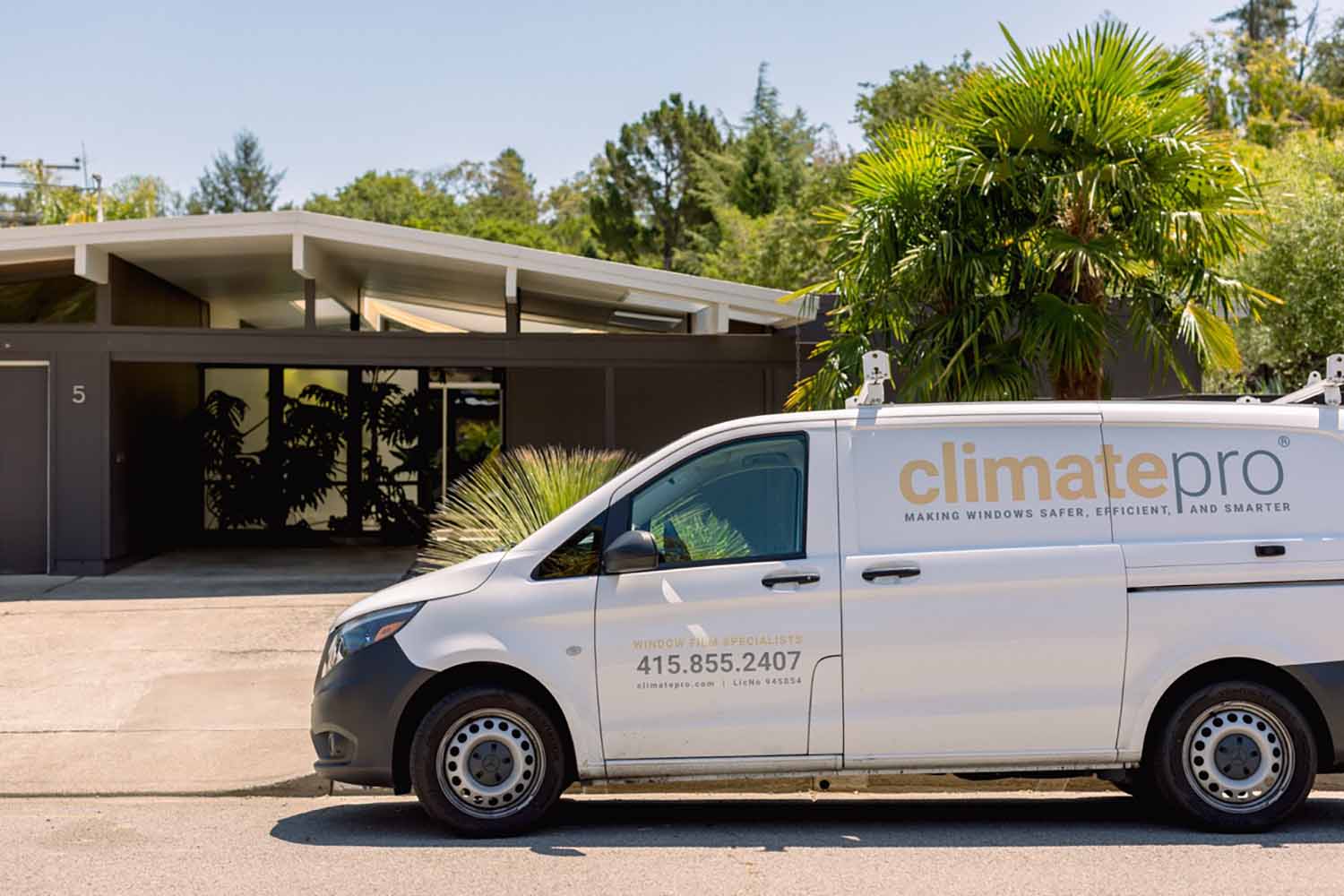
Project Examples
Here are some real-world scenarios to give you a better sense:
| Project Type | What’s Involved | Typical Investment |
| Small Job | Bathroom or home office Frosted film for privacy without blocking light Usually 2-4 windows | $500 – $1,200 |
| Medium Size | Living room or bedroom with heat/glare issues Solar or spectrally-selective film Typically 3-7 windows | $1,200 – $2,500 |
| Whole-Home | Complete residential installation Heat and UV protection throughout 10-15+ windows average | $2,500 – $5,000 |
| Small Retail Storefront | Street-level shop with display windows Security film or anti-graffiti protection 3-6 large windows | $1,500 – $3,500 |
| Office Suite | Commercial office space Glare reduction and energy savings 10-20 windows | $3,000 – $8,000 |
| Multi-Story Commercial | Large office building or complex Complete exterior treatment 50+ windows, multiple floors | $15,000 – $100,000+ |
Your actual investment will depend on your specific windows, accessibility, film choice, and project requirements. That’s why we provide detailed, transparent quotes that spell everything out.
Why Professional Installation Matters (And Why DIY Usually Doesn’t Work)
Look, we get it — you’re handy, you’ve watched some YouTube videos, and you’re thinking about saving money by doing this yourself.
Here’s the reality: window film installation is deceptively difficult. What looks simple in a 10-minute video becomes a frustrating mess when you’re dealing with:
- Air bubbles that won’t come out
- Dust particles trapped under the film
- Misaligned cuts that leave gaps
- Film that peels at the edges after a few months
- Damaged glass from improper technique
And here’s the kicker — when you DIY, there’s no warranty on the materials or your windows. If something goes wrong, you’re out the cost of materials AND you still need to hire a pro to fix it.
For commercial projects, DIY isn’t even an option. The scale, liability concerns, and need for proper insurance make professional installation the only viable choice.
When you hire ClimatePro, you get:
- Licensed and insured professionals with full liability and workers’ comp coverage
- 45+ years of combined experience in the Bay Area
- Lifetime warranty on residential installations (5-15 years for commercial)
- Professional-grade materials that aren’t available to DIYers
- No-hassle installation where we handle everything from prep to cleanup
It’s one less thing you have to worry about — and it’s done right the first time.
How Long Does Window Film Last?
Residential warranties: Most residential installations come with a lifetime warranty that covers fading, bubbling, peeling, delaminating, cracking, or color changes. There’s also a five-year thermal stress warranty for your windows. The only catch? The warranty is non-transferable if you sell your home.
Commercial warranties: Commercial installations typically come with 5-15 year warranties depending on the film type and application. This protects against the same issues — fading, bubbling, peeling, delaminating, cracking, or color changes.
Find out more about our warranties here
What About Auto Window Tinting?
Quick note: if you’re looking for car window tinting, that’s not something we do at ClimatePro. We specialize in residential and commercial window film. However, we’ve put together a list of the Top 5 car window tinting companies in the Bay Area here.
Frequently Asked Questions About Window Film Pricing
How much does window film cost in the Bay Area? Most Bay Area homeowners invest $2,000–$3,000 for a typical residential window film project; the full range is $750 to $5,000+ depending on window count, film type, and access. Commercial projects start around $1,000 and can exceed $100,000 for multi-story buildings.
Do you charge for estimates or consultations?
No. We provide 100% free consultations and detailed quotes at no cost. We’ll assess your space, discuss your needs, and give you a transparent proposal with everything spelled out.
What payment methods do you accept?
We accept all major credit cards, checks, and ACH transfers. For larger commercial projects, we can work with you on payment schedules tied to project milestones.
Do you offer financing?
Yes! We offer financing options for both residential projects. Ask us about available plans during your consultation.
Is there a minimum project size?
We handle projects of all sizes. For very small jobs (1-2 windows), there may be a minimum service charge — we’ll let you know upfront if this applies to your project.
How long is my quote valid?
Quotes are typically valid for 30 days. Material costs and availability can fluctuate, so we recommend moving forward within that window to lock in your price.
What’s included in your price?
Everything. Our quotes include the film, all prep work, professional installation, cleanup, and warranty. No hidden fees for ladders, lifts, removal of old film, or anything else. What you see is what you pay.
Can you work around my schedule?
Absolutely. For residential clients, we work with your availability. For commercial clients, we often schedule installations during evenings, weekends, or off-hours to minimize disruption to your business which will be outlined in your quote from us.
What if I need to reschedule?
Life happens — we get it. Just give us as much notice as possible, and we’ll work with you to find a new date.
Do you charge extra for difficult access or high windows?
No surprise fees. When we provide your quote, we assess everything — height, access, parking challenges, special equipment needs — and include it all in one transparent price.
How do I know if I’m getting a fair price?
That’s exactly why we create detailed proposals that break down what you’re getting. Compare our quote to others— film quality, warranty coverage, what’s included. The cheapest quote often leaves things out. Our goal is to give you the best value, not just the lowest number.
How long does installation take?
It depends on the scope. A few windows in a home might take a half-day. A whole-home installation typically takes 1-2 days. Commercial projects can range from a single day to several weeks for large buildings. We’ll give you a clear timeline when we quote your project.
Do you serve my area?
We proudly serve the entire San Francisco Bay Area — from San Francisco and Oakland to San Jose, Palo Alto, and everywhere in between. If you’re in the Bay Area, we can help.
Ready to Get Your Detailed Quote?
By now, you should have a solid understanding of what goes into window film pricing — and why comparing quotes based on scope, not square footage, is the only way to make an informed decision.
The best installations aren’t the cheapest — they’re the ones done right the first time, with quality materials, experienced installers, and transparent pricing from start to finish.
Here’s what happens next:
- Schedule your free consultation — We’ll assess your space, discuss your goals, and answer all your questions
- Get your detailed proposal — We’ll spell out exactly what’s included, which film we recommend, and the total investment
- We handle everything — From scheduling to installation to cleanup, we make the process smooth and hassle-free
So while there’s no one-size-fits-all number, your price will always reflect the full scope — the craftsmanship, materials, and attention to detail that make the job last.
Ready to love your view again?
Get your 100% free consultation here or call us at (707) 755-7337
Jeremy Dobbins
General Manager, ClimatePro
Last updated: June 26. 2026