
If you want privacy but still want daylight, etched glass and frosted window film are usually the first choices.
From across the room, they can look almost identical. The real difference shows up after installation, when you’re living with it and maintaining it, or when your space changes and you wish you’d made a different call.
That’s where this choice actually matters.
How each one is made
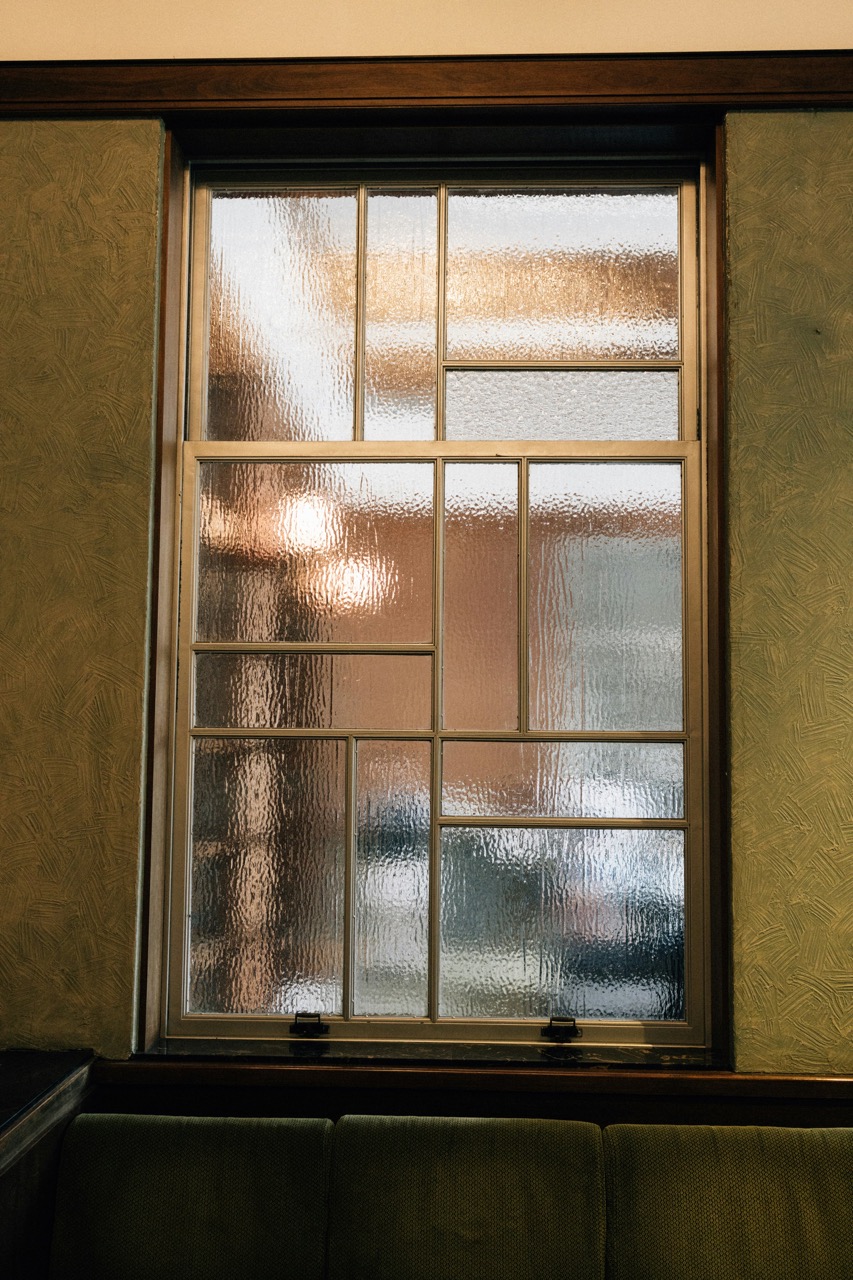
Etched glass is created by blasting or acid-etching the surface of the glass itself. The frosting becomes part of the glass, making it permanent. Once it’s done, it’s done.
Frosted window film works differently. It’s a thin polyester layer applied to the glass you already have. High-quality options, like 3M Frosted and Decorative Window Films, are designed to closely replicate the look of etched or sandblasted glass without altering the glass underneath.
Visually, the two can be hard to tell apart. The experience of owning them is where the differences start to show.

Cost and installation
Etched glass is usually one of the more expensive ways to get a frosted look. Etched glass typically entails specialty fabrication or full glass replacement, which drives up material costs and extends timelines. Installations tend to be more disruptive, especially in occupied spaces.
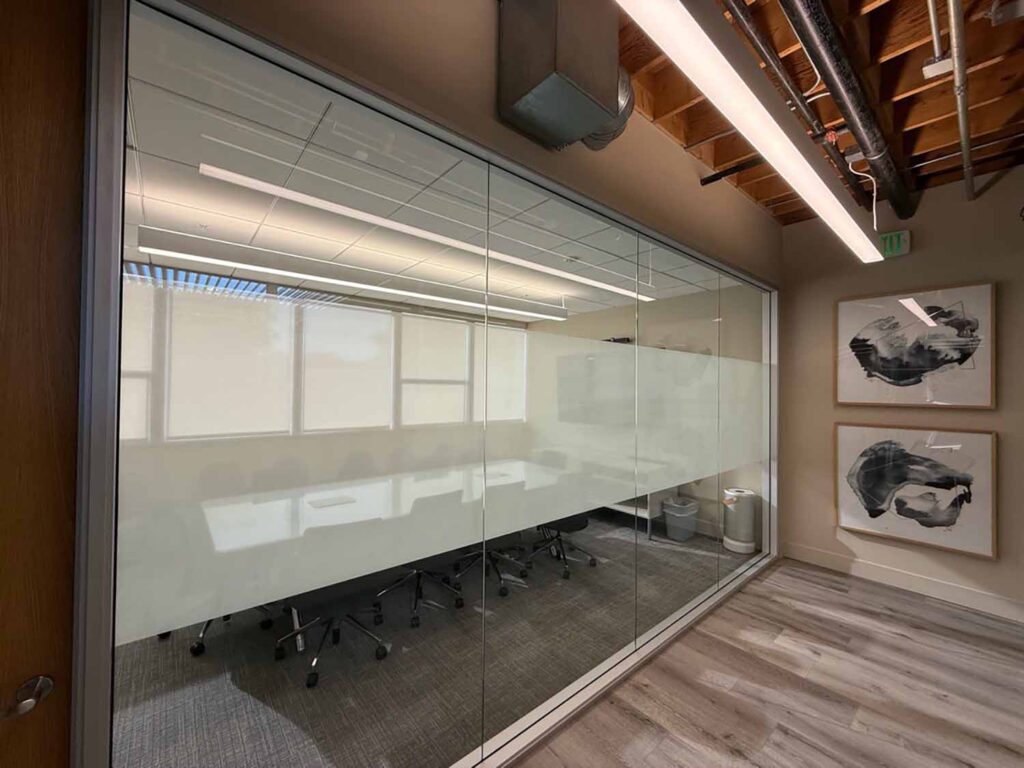
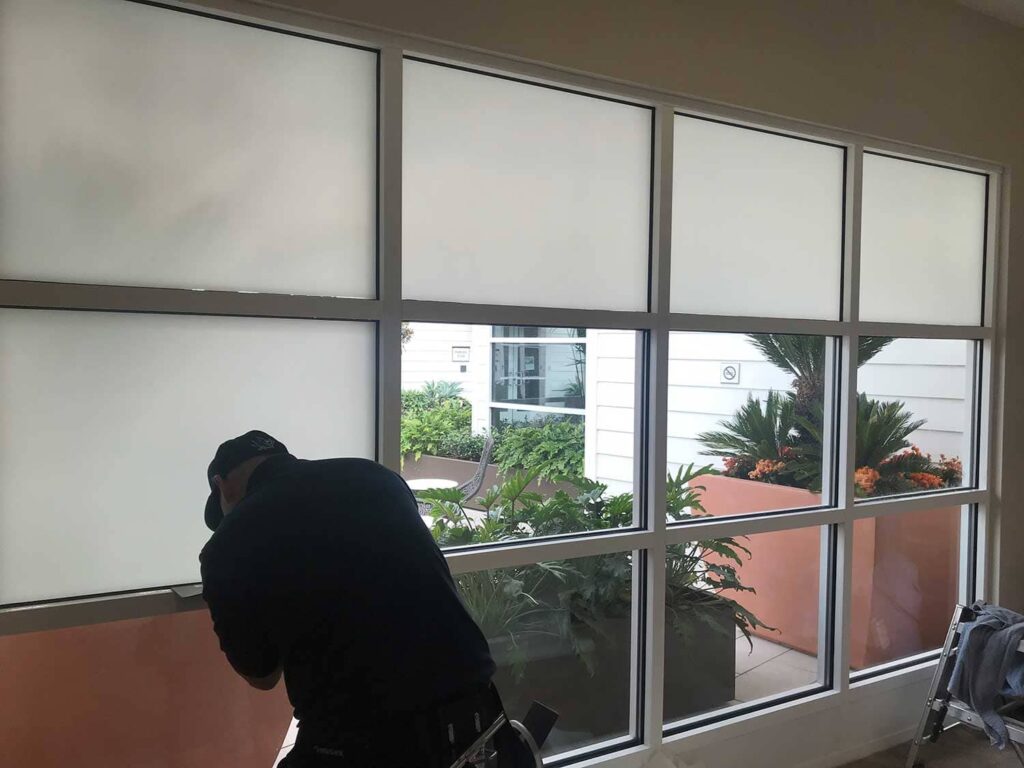
Frosted window film avoids most of that. Since it installs directly onto existing glass, there’s no need for new glazing or construction. Most installs are completed in hours, not days. That speed alone is why many offices and storefronts lean toward film when quick privacy is needed.
Design and appearance
Etched glass has a physical texture that some people associate with a high-end, handcrafted feel. In custom architectural features, that texture can be part of the appeal.
Modern window film has closed the gap more than most people expect. Decorative films from 3M, including the Fasara and Crystal series, are engineered to mimic etched, cut, or sandblasted glass with a clean, consistent finish across large panels.
Frosted window film also makes design changes easier. Logos, gradients, and partial frosting can be added without custom fabrication. For businesses that care about branding or may need to update their look later, that flexibility matters.
Flexibility over time
This is often the deciding factor.
Etched glass is permanent. If privacy needs change, a layout shifts, or branding gets updated, the only way to change the look is to replace the glass.
Frosted window film is removable and replaceable. If a company rebrands or a space gets reconfigured, the film can change with it. For leased spaces or growing businesses, that flexibility saves money and avoids unnecessary construction.
More than just privacy
Both etched glass and frosted film provide visual privacy while letting light pass through. Frosted window film often offers additional benefits not found in etched glass. Many window films help block UV rays, reduce glare, and add extra safety by helping hold glass together if it breaks. All of that comes without altering the glass’s appearance.
Cleaning and upkeep
Etched glass has a textured surface, which tends to trap dust, oils, and fingerprints. That makes cleaning more time-consuming, especially in busy areas.
Frosted window film has a smooth surface and cleans much like standard glass. In busy offices or commercial spaces, that difference shows up fast.
So which one makes sense?
Etched glass still makes sense when the goal is permanent and custom, and the budget isn’t a major constraint.
For most modern homes and businesses, frosted window film delivers the same clean look at a lower cost and with far more flexibility. That’s why solutions like 3M™ Frosted and Decorative Window Films show up so often in offices, conference rooms, and storefronts.
The Pros and Cons of Etched Glass vs Frosted Window Film
Factor | Etched Glass | Frosted Window Film |
|---|---|---|
Upfront cost | Higher due to fabrication and glass replacement | Lower since existing glass is used |
Installation time | Longer and more disruptive | Fast, often completed in hours |
Permanence | Permanent and not reversible | Removable and replaceable |
At the end of the day, the choice comes down to how permanent you want the solution to be and how much freedom you want later. In many spaces, frosted window film simply fits how people actually live and work.If you want to see how this looks in real spaces, our team can show you examples of how frosted films are used every day, in both homes and offices. Call ClimatePro at 707.755.7337 for a free estimate or get started online here.
Frequently Asked Questions
Does frosted window film look cheap compared to etched glass?
Not if you’re using quality film. High-end decorative films are designed to closely match the look of etched or sandblasted glass. Once installed, most people can’t tell the difference unless they’re touching the surface. The bigger difference shows up later, when changes or updates are needed.
Is etched glass more durable than frosted window film?
Etched glass won’t peel or lift because the finish is part of the glass itself. That said, professionally installed window film is very durable and holds up well in busy spaces. If the film does get damaged, it can be replaced without replacing the glass, unlike etched glass.
Can frosted window film be removed without damaging the glass?
Yes. When it’s installed and removed correctly, the glass underneath stays intact. That’s one of the main reasons film works well in leased spaces or places where privacy needs may change.
Which option is better for offices and conference rooms?
In most cases, frosted window film makes more sense. It installs quickly, costs less, and allows for branding or layout changes down the road. Etched glass tends to work better when the design is meant to remain the same over the long term.
Does frosted window film block natural light?
No. Frosted film provides visual privacy while allowing light to pass through. Spaces stay bright, just without clear sightlines.
Can I add logos or patterns with both options?
You can, but the process is very different. With etched glass, custom designs usually mean higher costs and longer lead times. With window film, logos, gradients, and patterns can be added or updated without replacing the glass.
Is one option easier to clean?
Frosted window film is easier to maintain. Its smooth surface cleans like regular glass. Etched glass has texture, which can trap dust and fingerprints and take more effort to keep clean.
Does frosted window film provide any benefits beyond privacy?
Yes. Many frosted films help block UV rays, reduce glare, and add a layer of safety by helping hold glass together if it breaks. Etched glass doesn’t offer those extras on its own.
Which option costs less overall?
Frosted window film usually costs less upfront and over time. Etched glass often involves higher material costs, longer installation timelines, and glass replacement if changes are needed later.
How do I know which option is right for my space?
Ask yourself how permanent you want the solution to be. If the design needs to stay the same for years and budget isn’t a concern, etched glass can work. If flexibility, speed, and cost matter, frosted window film is usually the better fit.